Data Centers 101
Data Centers Worldwide
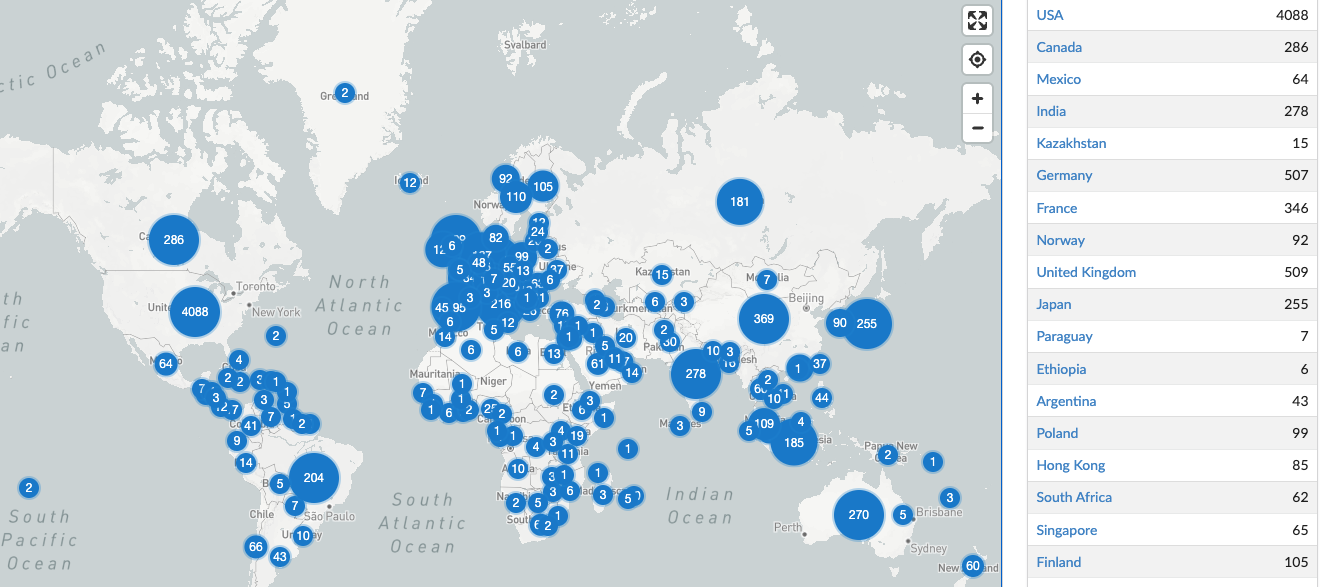
Explore a map of data centers worldwide. As of February 2026, the United States leads the world in data center capacity, with more than 4,000 facilities—surpassing the combined total of the next 15 countries. This dominance is the result of sustained investment by cloud providers and major technology firms. The United Kingdom and Germany follow as the next largest markets, each with roughly 500 data centers, while China ranks behind them with approximately 370.
Data Center Electrical Demand and Fiber Optic Cable Connections Across the US
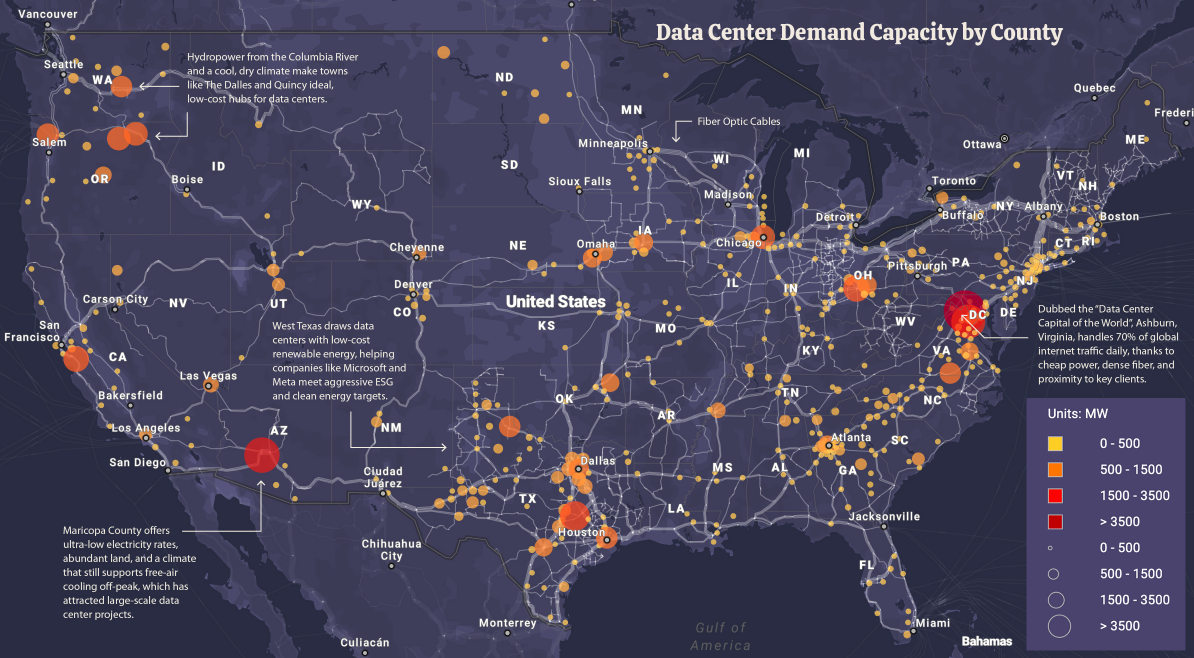
Data center development has largely focused on regions offering low-cost power and strong fiber connectivity—key requirements for high-performance operations. Notable examples include Loudoun and Prince William Counties in Virginia, as well as Maricopa County in Arizona. By 2025, Northern Virginia’s extensive data center ecosystem is estimated to support roughly 70% of global internet traffic.
In the late 1940s, organizations relied on punch card computers to store and process data on-site, long before the rise of desktop computing. As businesses grew and data volumes expanded—while technology continued to shrink in size—mainframes gradually gave way to local server rooms and, eventually, to off-site facilities housing interconnected servers that support cloud and AI-driven applications.

Watch a time-lapse of the Construction of a Data Center
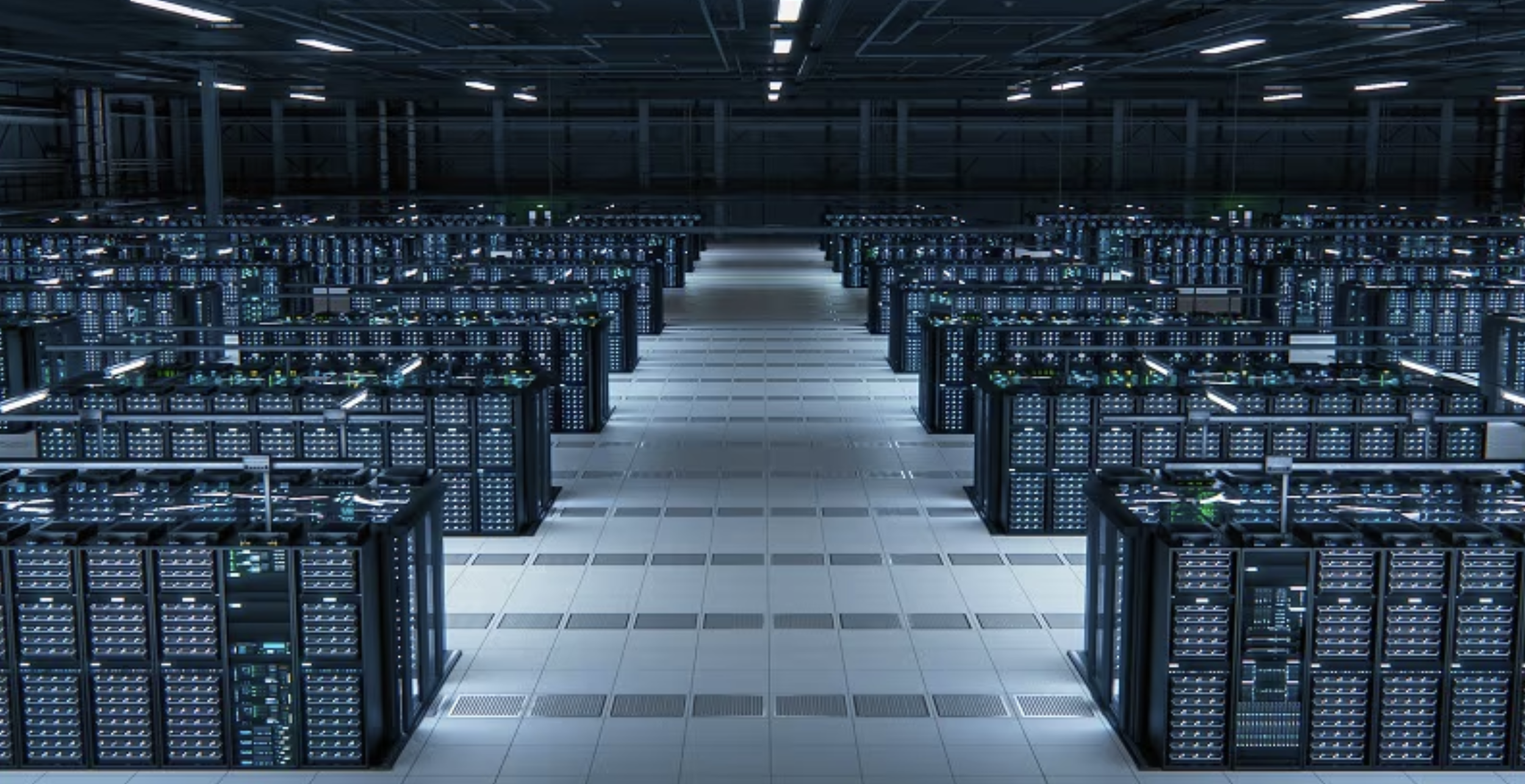
Watch this data center come to life. Once the data center’s outer structure is complete, cooling systems are installed, followed by the build-out of interior offices and support spaces. Before server racks and equipment are deployed, the flooring in those areas is elevated to allow for the circulation of cooling fluids and to enable efficient cable management..