
Working Together to Build the Data Centers for Tomorrow
Today’s Signal
July 20, 2026
From Conflict to Collaboration: What Two Communities Can Teach America About Better Data Center Development
The future of data centers won't be determined by technology alone. It will be determined by trust.
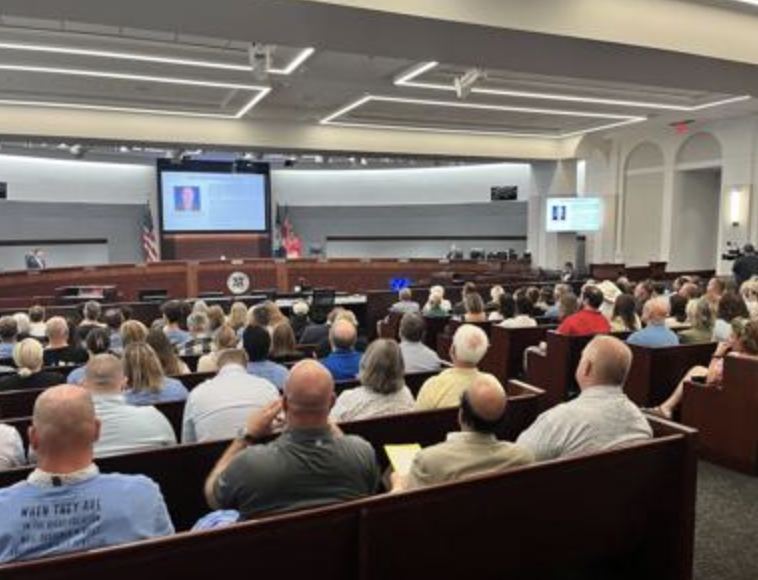
For much of this past week, the national conversation surrounding data centers centered on protests, public meetings, and growing concerns about how digital infrastructure is being introduced into communities.
Those demonstrations reflected real frustration in many parts of the country. But they also present an opportunity. Rather than asking whether communities should support or oppose data centers, perhaps the better question is:
What does success actually look like?
Fortunately, we don't have to speculate. Communities around the world are already demonstrating that data centers can become valuable community assets when developers, local governments, utilities, and residents work together from the earliest stages of planning.
The lesson is remarkably simple: The best projects aren't defined by the size of the campus. They're defined by the strength of the partnership.
Case Study #1: Tallaght, Ireland — When a Data Center Heats an Entire Community
One of the world's most innovative examples is found just outside Dublin.
Instead of viewing a data center as a large electricity consumer, South Dublin County Council asked a different question: How can this infrastructure create additional value for the community?
Working together with Amazon, Fortum, Codema, and national government partners, the community developed Ireland's first large-scale district heating network powered by waste heat from a nearby Amazon data center. Today, that recovered heat warms public buildings and residential properties while reducing carbon emissions and dependence on imported fuels. Just as important, the partners emphasized community engagement through public tours, education, and outreach throughout the project. Early collaboration during the permitting phase was cited as one of the keys to success.
The lesson isn't that every community should build a district heating network. The lesson is that infrastructure planning should begin by asking: "How can this project create additional benefits beyond its primary purpose?"
Case Study #2: Botetourt County, Virginia — Planning Growth Together
Closer to home, Botetourt County, Virginia offers another instructive example.
When Google announced plans for a new data center campus, the project was located within Greenfield, the county's designated technology and industrial park—the only area already zoned for data center development.
Rather than expanding into residential areas, the project aligned with decades of long-term land-use planning. Google also committed millions of dollars toward county initiatives while local officials emphasized responsible development, infrastructure planning, and ongoing communication with residents. County leaders framed the investment not simply as economic development, but as part of a broader vision for the community's future.
Whether one supports or opposes any individual project, the planning philosophy is worth noting.
The conversation began with: Where does this fit within our long-term vision?
Not: How quickly can we approve it?
What These Communities Have in Common
Ireland and Virginia could hardly be more different.
Different governments. Different regulatory systems. Different energy markets. Different communities.
Yet both projects reveal the same underlying principles.
Successful projects begin with planning—not persuasion. They integrate with existing infrastructure rather than forcing communities to adapt around them. They identify tangible community benefits from the outset. And they recognize that communication is not something that happens after permits are issued. It is part of the project itself.
A Blueprint for Community-Compatible Data Centers
As Gov DCx has explored throughout the past week, America is entering one of the largest digital infrastructure expansions in its history.
Artificial intelligence, advanced manufacturing, healthcare, scientific research, cloud computing, and national security will all require additional computing capacity.
That reality is unlikely to change. What can change is how we build. Based on lessons from successful projects around the world, we believe every community should expect developers to answer five fundamental questions before construction begins:
Does this project align with the community's long-term vision?
How will it strengthen—not simply use—local infrastructure?
How will natural resources be managed responsibly?
What lasting value will it create for the community?
How will communication continue long after approval?
These questions are not barriers to development. They are the foundation of responsible development.
Moving Beyond Opposition
One of the clearest lessons from this past week's national conversation is that America doesn't need more polarization around data centers.
It needs more collaboration. Residents deserve clear information. Developers deserve the opportunity to explain their projects. Utilities deserve long-term planning. Local governments deserve practical frameworks for balancing growth with quality of life.
When those conversations happen early—and continue throughout the life of a project—communities are far more likely to see digital infrastructure as an investment rather than an imposition.
That is not idealism. It is increasingly becoming best practice.
Gov DCx POV
The events of this past weekend should not mark the beginning of a deeper divide over digital infrastructure. Instead, they should serve as a catalyst for a better model—one built on transparency, early engagement, thoughtful planning, and shared value. Around the world, communities are proving that responsible data center development is not only possible but repeatable. America now has the opportunity to build on those lessons and establish its own standard for Community-Compatible Data Centers.
Community-Compatible Data Center Principles
As we launch this initiative, Gov DCx proposed five guiding principles for every major data center project:
1. Educate Before You Build
Communities deserve to understand why digital infrastructure matters and how it supports the services they rely on every day.
2. Engage Early, Engage Often
Meaningful dialogue should begin well before zoning hearings and continue throughout the life of the facility.
3. Strengthen Community Infrastructure
Projects should leave behind stronger electric systems, communications networks, resilience, and public infrastructure than existed before.
4. Create Shared Community Value
Economic development should extend beyond tax revenues to include workforce development, education, local partnerships, and environmental stewardship.
5. Be a Trusted Long-Term Neighbor
Data centers are generational infrastructure investments. Their success should be measured not only by uptime, but by the trust they earn within the communities they serve.
About
Gov DCx (Government Data Center Exchange) is committed to the ongoing advancement of secure and robust data centers by providing a platform that inspires, educates and empowers our community to meet the ever-changing demands of data centers.
It is a knowledge exchange for those who design, build, operate and maintain mission critical enterprise infrastructures within the Public Sector. We share strategies, policies, and technologies reshaping government infrastructure.
Mission-Critical Infrastructure Insights
Sustainability & Energy Optimization
Cybersecurity, Modernization & Compliance
Featured Insights


Contact Us
Sign up to get insights, event invites, and early access to the Gov DCx platform as we grow the most trusted community in public sector infrastructure.